
More people now ask ChatGPT, Google’s AI Overviews, or Perplexity a question than type a search and scroll through ten blue links. That shift has a name: Generative Engine Optimization, or GEO. If you have only ever optimized for the old kind of search results page, this is the guide that catches you up — what GEO actually is, how it differs from classic SEO, and the three pillars that determine whether it works.
What Is GEO (Generative Engine Optimization)?
GEO is the practice of optimizing content so it gets picked up, understood, and cited by AI systems that generate answers — Google’s AI Overviews, ChatGPT search, Perplexity, Microsoft Copilot, and similar tools. Instead of competing for a ranking position on a results page, GEO competes for a spot inside the answer itself: a citation, a quoted line, a source link the AI decides is trustworthy enough to reference.
Where Does the Term Come From?
GEO first appeared in academic research studying how content actually gets selected and cited inside AI-generated answers. The term caught on quickly with marketers and SEOs once AI Overviews and chat-based search rolled out broadly, because it named something practitioners were already noticing: the old playbook of ranking #1 no longer guaranteed visibility if an AI system was answering the question before a user ever saw a results page.
GEO vs. AEO (Answer Engine Optimization) — Same Thing?
The two terms overlap heavily and are often used interchangeably. AEO grew out of the featured-snippet and voice-search era — optimizing content to directly answer a question in a box. GEO is the newer, broader term for optimizing specifically for generative AI systems that synthesize an answer from multiple sources rather than lifting one snippet. In practice, the underlying work is nearly identical, and most people now just say GEO.
Why Does GEO Matter Now?
- AI Overviews and AI-generated answers now appear on a large and growing share of searches, often above the traditional results.
- A meaningful share of people now start their search in an AI assistant instead of a search engine at all.
- Zero-click answers still build awareness and trust — being the cited source works like a first-page ranking used to, even without a click.
- The space is still young. Most competitors have not deliberately optimized for it yet, which means an early, real advantage for the ones who do.
What Happens If You Ignore It?
Nothing breaks overnight. But the “citation position” inside an AI answer is becoming what the #1 organic ranking used to be — and competitors who optimize for it are quietly claiming that spot while everyone else keeps optimizing only for a results page fewer people scroll through.
SEO vs. GEO: What’s Actually Different?
| Traditional SEO | GEO | |
|---|---|---|
| Goal | Rank high on the results page | Get cited inside the AI-generated answer |
| Success metric | Clicks, impressions, position | Citations, brand mentions, assisted visibility |
| Content style | Keyword-targeted, built for skimming and snippets | Direct, factual, easy for a model to extract and summarize |
| Trust signals | Backlinks, domain authority | Backlinks + corroboration across multiple independent sources |
In practice, the two overlap far more than they conflict. A technically healthy, clearly written, well-referenced site tends to perform well at both — which is exactly the point of the next section. For a deeper side-by-side breakdown, see SEO vs. GEO: What’s the Difference (and Why You Need Both).
The Three Pillars of Good SEO & GEO
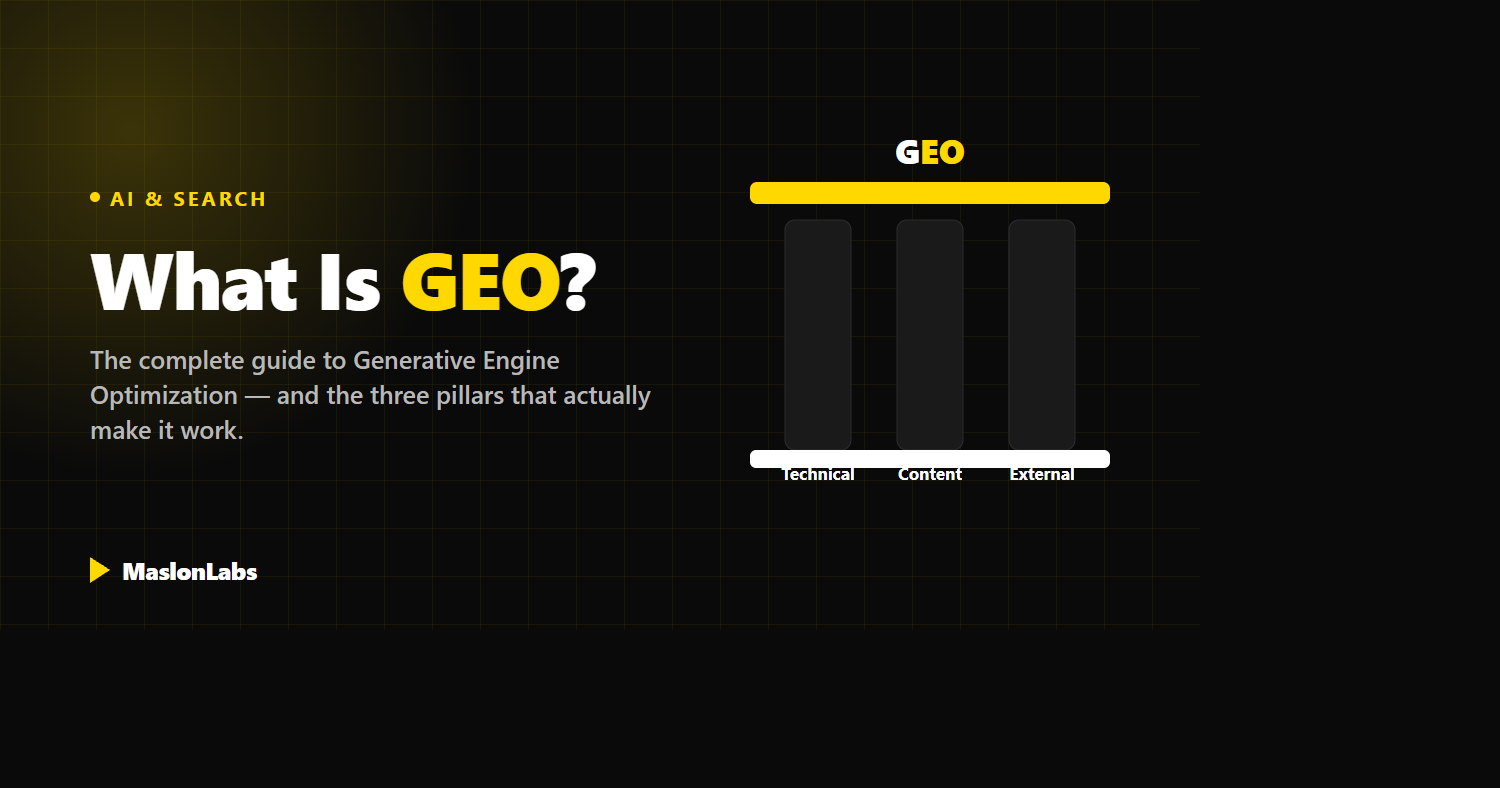
Strip away the acronyms and both disciplines rest on the same three foundations. Get all three right and the ranking-vs-citation distinction stops mattering much — you show up in both.
Pillar 1: Technical — Can Machines Actually Read Your Site?
Crawlability, page speed, clean semantic HTML, mobile-first layout, and structured data (schema.org) all make it easier for both search crawlers and AI systems to parse what your page is actually about. This is also where forward-looking, machine-readable formats like llms.txt belong — not required by any search engine today, but part of a genuinely thorough technical foundation.
Pillar 2: Content — Does It Actually Answer the Question?
Content that gets cited is direct, factual, and organized so the answer is easy to extract — clear headings, a real point of view, and genuine expertise instead of a reworded summary of what everyone else already published. AI systems are, in effect, another reader deciding whether your page is worth quoting.
Pillar 3: External — Do Other Sources Vouch for You?
Backlinks, brand mentions (even unlinked ones), reviews, and being referenced elsewhere online all signal that other sources corroborate what your site claims about itself. AI systems weigh this kind of independent confirmation heavily — a page saying “we are the best” carries little weight; other sites and sources saying it does.
“Good SEO and GEO both come down to the same three pillars: Technical, Content, and External — your site’s structure and speed, the actual substance and clarity of what you publish, and how the rest of the internet talks about you through links and mentions. The deeper you go into any one of them, the more obvious it becomes: GEO isn’t a new discipline you bolt on top of SEO. GEO is just good SEO — done thoroughly enough that a machine can understand it too.”
Mateusz Maslon
Founder, MaslonLabs
How to Actually Implement GEO on Your Site
Technical Checklist
- Fast load times and healthy Core Web Vitals
- Clean, semantic HTML and a logical heading structure
- Structured data (schema.org) for key content types
- A crawlable, well-organized site structure with no dead ends
- Optional but worthwhile: a machine-readable content index such as llms.txt
Content Checklist
- Answer the actual question in the first few sentences, then go deeper
- Write with a clear point of view, not a rewritten summary of page one
- Use descriptive headings that double as extractable answers
- Back claims with real specifics, examples, and expertise
- Keep content current — AI systems favor freshness on fast-moving topics
For a deeper, step-by-step walkthrough of this list, see How to Get Cited by AI Assistants: A 9-Step Content Checklist.
External Checklist
- Earn links from relevant, credible sites — not low-quality directories
- Get listed, reviewed, and mentioned in places your industry actually discusses
- Keep business details (name, address, contact info) consistent everywhere they appear
- Encourage genuine reviews and testimonials on third-party platforms
Common GEO Myths You Can Safely Ignore
It is easy to overcorrect. A few things you do not need to worry about (we go deeper on Google’s own official guidance in our step-by-step AI search guide):
- You do not need to rewrite every page into a rigid Q&A format.
- You do not need a dozen special AI-specific markup files — the basics done well matter far more than exotic tags.
- Chasing every individual AI crawler user-agent is not a strategy. A healthy, accessible site already welcomes them.
- Seeking inauthentic mentions on forums and comment sections does not help — and can hurt.
How Do You Measure GEO Success?
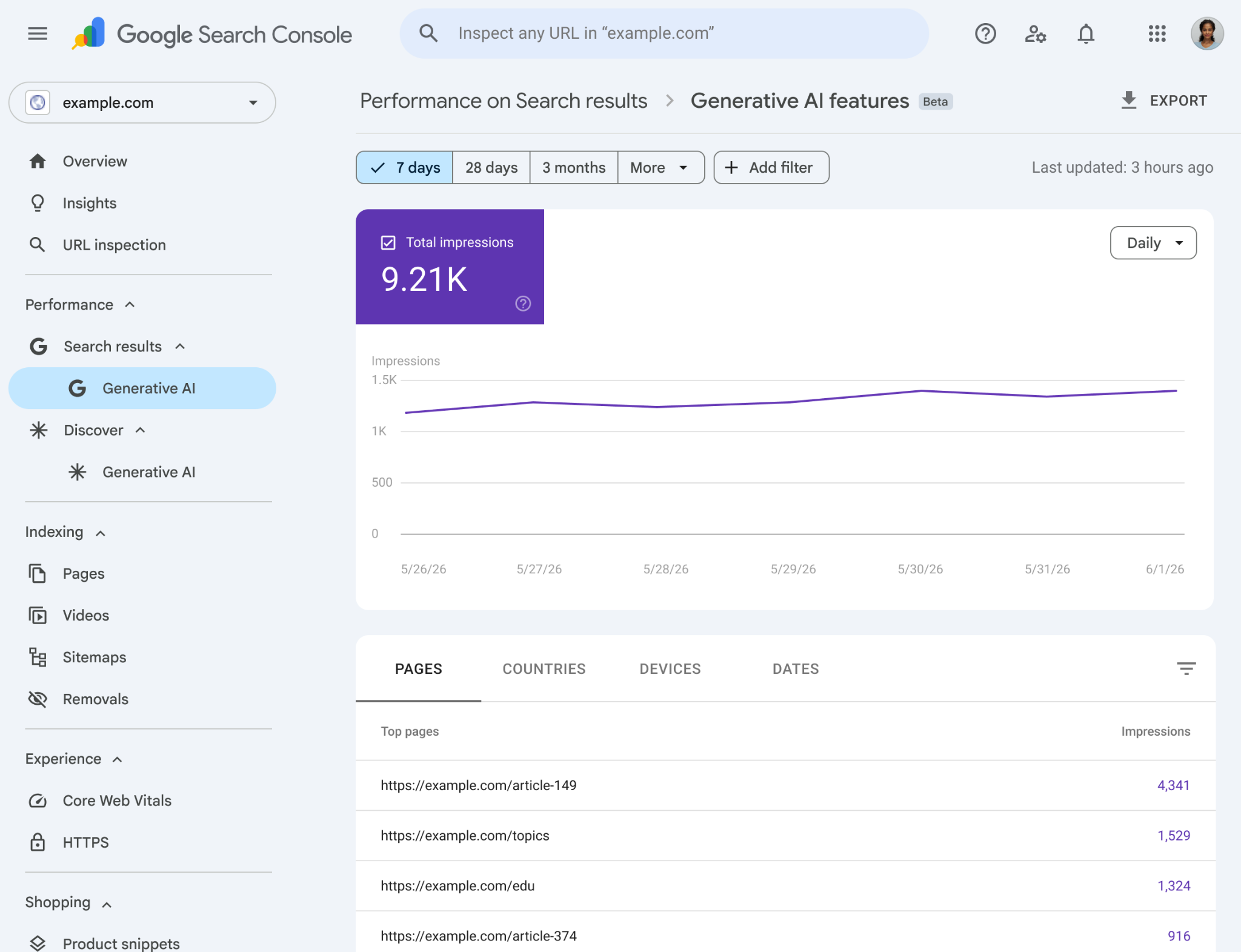
Google Search Console and Bing Webmaster Tools both now report impressions from Generative AI search features as their own metric — start there (see our full walkthrough: How to Track AI Performance in Google Search Console). Beyond the dashboards, the simplest test is a manual one: ask ChatGPT, Perplexity, and Google’s AI Overview the exact questions your customers ask, and see whether your site shows up as a source.
If you want your AI assistant pulling that data directly instead of screenshotting dashboards, see Best MCP Servers for SEO Specialists.
Want to check where you stand on all three pillars right now? Run through The GEO Self-Audit Checklist. And if you build apps, the same rules apply to your store listing — see Will ChatGPT Recommend Your App?
Conclusion: So, Is GEO Just Good SEO?
Mostly, yes. GEO adds a real, useful lens — being cited by an AI system is a genuinely different goal from ranking on a results page, and it rewards clarity and corroboration in ways classic SEO sometimes let slide. But the underlying work is the same three pillars it always was: a technically sound site, content that actually answers the question, and evidence from the rest of the internet that backs up what you say about yourself. Do those three things thoroughly, for people first, and both search engines and AI systems tend to agree with the result.
Want help building all three? That is exactly what our SEO & GEO service does.