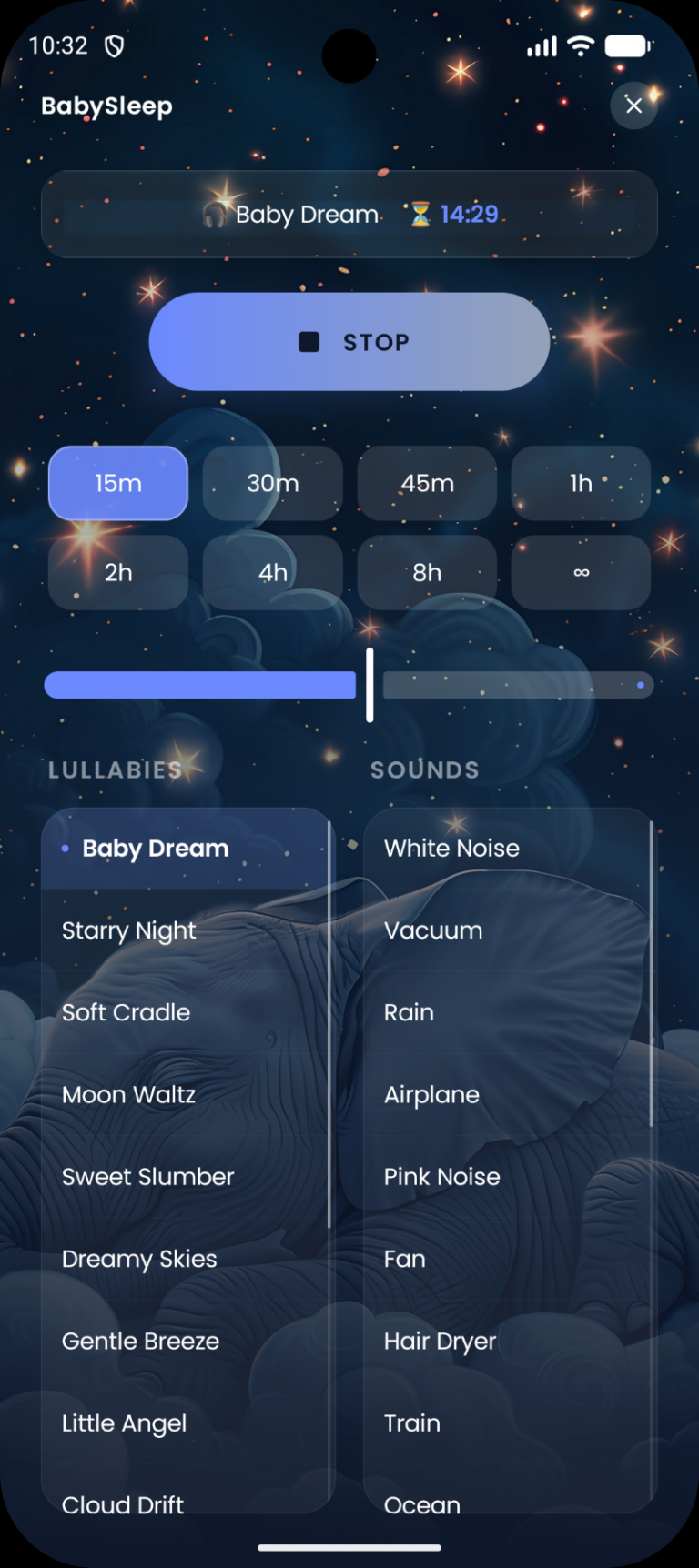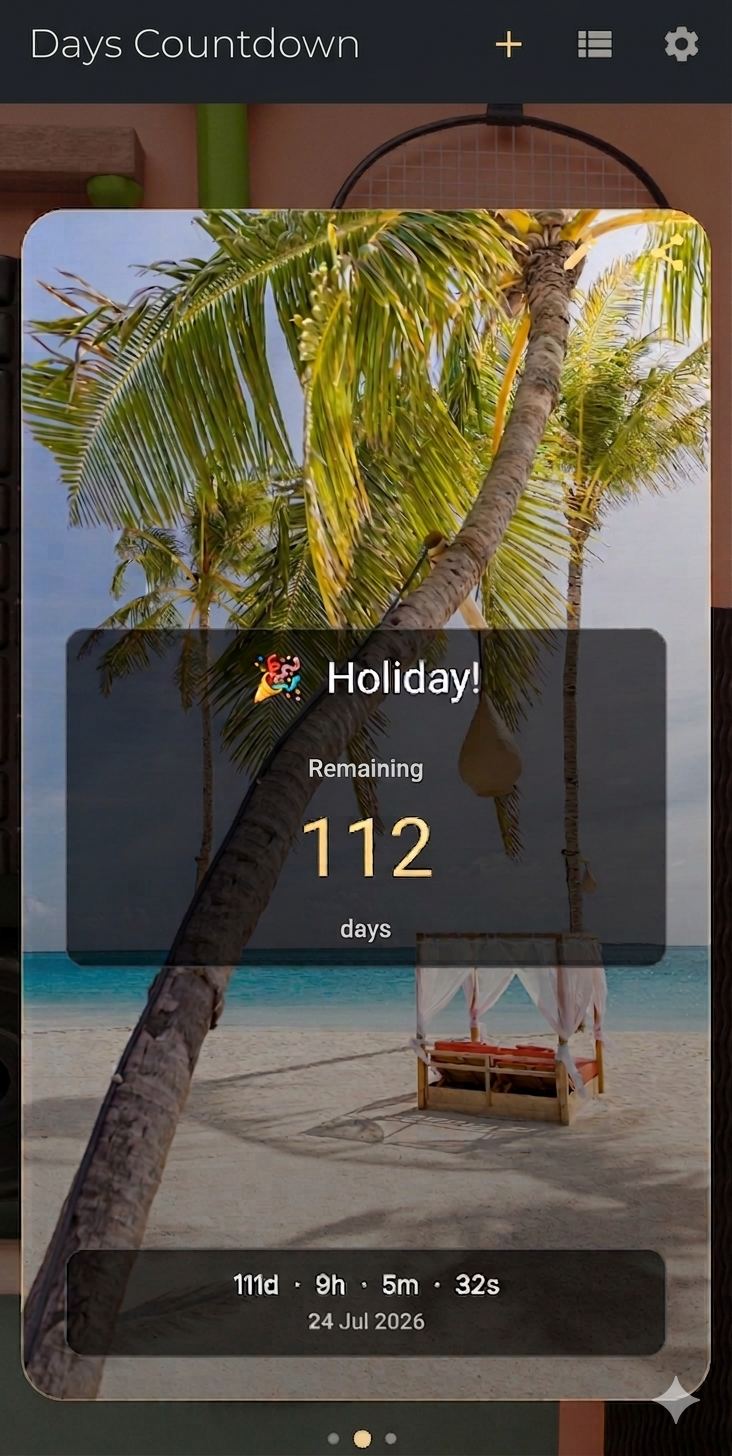

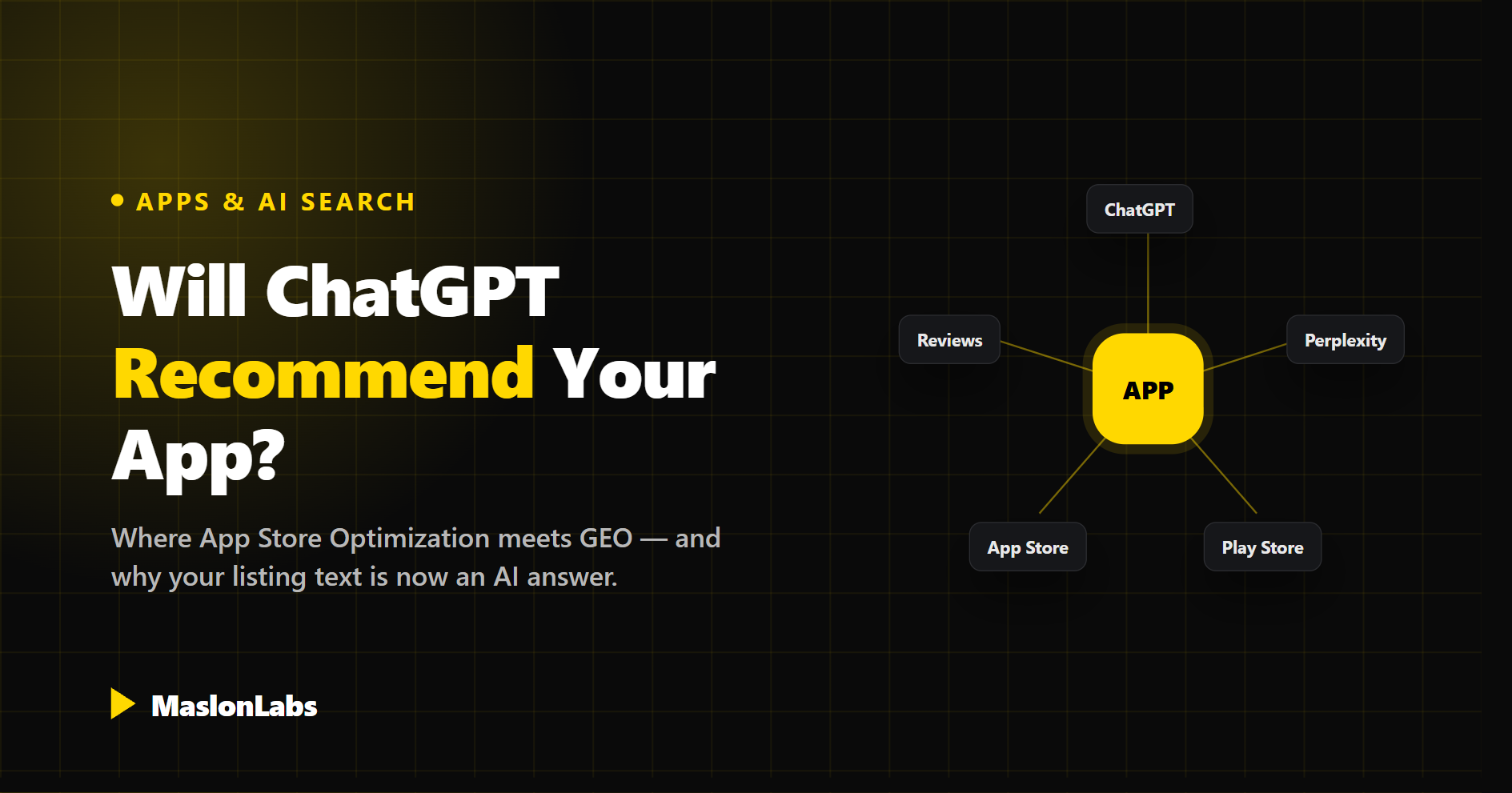
Type “best app for tracking a countdown” into ChatGPT instead of the Play Store, and you get a short answer with one or two apps named directly — no scrolling through a ranked list of icons and star ratings. That shift changes what App Store Optimization (ASO) actually has to do. It is no longer just about ranking in a store’s own search results; it is about being the answer an AI assistant gives when someone asks what to install.
Why AI Assistants Are Becoming an App Discovery Channel
Asking a chat assistant “what’s a good app for X” skips several steps that app store search used to require: typing keywords, comparing icons, reading a few descriptions, checking star ratings. An AI assistant collapses all of that into one answer, drawn from the same public listings that have always existed — it just reads them differently, and picks a winner on your behalf. If your listing isn’t written for that kind of reading, you simply don’t get picked, no matter how well you rank inside the store itself.
What AI Assistants Actually Read When Recommending an App
AI assistants recommending apps draw heavily on the same public listing text every human reads — title, short description, full description, category, and ratings/review sentiment. Research from ASO platform Apptweak found that app store listings account for nearly half of all sources ChatGPT cites when recommending apps.
47.5%
of everything ChatGPT cites when recommending an app comes directly from the app store listing text itself — making the listing the single highest-leverage surface to optimize for AI visibility.
That means the listing copy you write is not just marketing anymore. It is the primary source document a model reads before deciding whether your app is the answer to someone’s question.
“
An app store listing is not marketing copy anymore — it is the exact text an AI model reads when someone asks “what’s a good app for X?” We write ours the same way we’d write anything meant to be cited: lead with what it does, back it with specifics, and never make a model guess.
— Mateusz Maslon, SEO/GEO Specialist 🎯
LinkedIn ↗
Traditional ASO vs. GEO-Aware ASO
| Traditional ASO | GEO-Aware ASO | |
|---|---|---|
| Goal | Rank in the store’s own search results | Get named directly in an AI-generated answer |
| Primary target | Keyword density in the title & subtitle | A description a model can extract without guessing |
| Success looks like | Impressions and installs from store search | Citations inside AI-generated recommendations |
How to Write an App Listing That Gets Recommended
- Answer who, what, and when in the first lines. A model should be able to extract who the app is for and what it does without reading past the first sentence.
- Back claims with real specifics — exact features, supported languages, board sizes, difficulty levels — instead of vague phrases like “the best app for X.”
- Avoid keyword-stuffed walls of text. A description written to game store search algorithms reads as noise to a language model, not a relevance signal.
- Keep the listing current. A “What’s New” section that hasn’t moved in a year reads as an abandoned app to both users and AI systems.
- Keep naming consistent everywhere — your website, your store listing, and any press mentions should use the same app name and description, the same way a brand keeps its identity consistent across a knowledge graph.
- Encourage genuine reviews. Review sentiment is part of what a model reads when deciding whether to recommend an app with confidence.
A Real Example: How We Structure Our Own Listings
We apply this to our own portfolio of Android apps. Paper Soccer: Dots & Lines‘s listing opens by naming exactly what it is and who it’s for, then backs that up with concrete specifics — 5 board sizes, 3 AI difficulty levels, 12 supported languages — rather than adjectives. Countdown Days Widget and Bubble Level follow the same pattern: lead with the single job the app does, then list what makes it capable of doing that job well. None of it is written to be flattering. It is written to be extractable.
This Is Just GEO, Applied to a Different Surface
Nothing here is a new discipline invented for app stores. It is the same three-pillar approach we use for websites — a technically clean listing, content that actually answers the question, and external proof in the form of genuine reviews — applied to a different piece of public text. Read the full framework in What Is GEO?, and the content-level version of these same habits in How to Get Cited by AI Assistants.
Getting This Right Matters for Client Work Too
This is exactly the kind of audit we run as part of our Android App Development and SEO & GEO services — whether that means writing a new listing from scratch or auditing one that already exists.
Frequently Asked Questions
Do AI assistants actually recommend specific apps?
Yes — when asked a question like “what’s a good app for X,” assistants such as ChatGPT and Perplexity commonly name specific apps directly, drawing on public app store listing text and reviews to make that recommendation.
Does traditional App Store Optimization still matter?
Yes. The technical fundamentals of ASO — a clear title, relevant category, genuine reviews — still matter for both store search and AI recommendations. GEO for apps builds on top of that foundation rather than replacing it.
Which matters more for AI citations, Google Play or the Apple App Store?
Both matter, but research shows the App Store (Apple) and Google Play together account for the large majority of app-related citations AI assistants make, so a consistent, well-written listing on both is worth the effort.
Can I optimize an existing app listing without resubmitting the app itself?
Yes — listing text (title, description, screenshots captions) can typically be updated independently of the app binary, so this is one of the fastest GEO improvements available to an existing app.
Is this different from regular ASO keyword research?
It complements it rather than replacing it. Keyword research still helps you understand what people search for; GEO-aware writing makes sure the resulting listing text is something a language model can confidently extract and cite, not just something a store search algorithm can match.
How do I know if my app is already being recommended by AI assistants?
Ask ChatGPT, Perplexity, and Google’s AI Overviews the exact questions your target users would ask, and see whether your app comes up. If a competitor is named instead, compare their listing against yours for structure and specificity.
The store search bar hasn’t disappeared, but it now has a fast, opinionated assistant standing in front of it. Write for the assistant, and the search bar tends to follow.