
“How much does it cost to build an Android app?” is one of the questions we get asked most — and also one of the hardest to answer honestly with a single number. Two apps that sound almost identical in a first conversation can cost wildly different amounts to build, because the number is driven by scope, not by the word “app” itself. Here is what actually moves the price up or down, without pretending a generic figure applies to your project.
Have a project in mind?
Get a Free Estimate →Why We Don’t Publish a Price List
You’ll find plenty of guides online quoting industry-wide ranges — often somewhere between $20,000 and $300,000+ depending on complexity, according to figures published by agencies like Appinventiv and Netguru. Those numbers are real, but they average together everything from a single-screen utility app to an enterprise platform with a full backend team behind it — which makes the average close to meaningless for any one project. We’d rather scope your actual app and give you a real number than hand you a range wide enough to be true of almost anything.
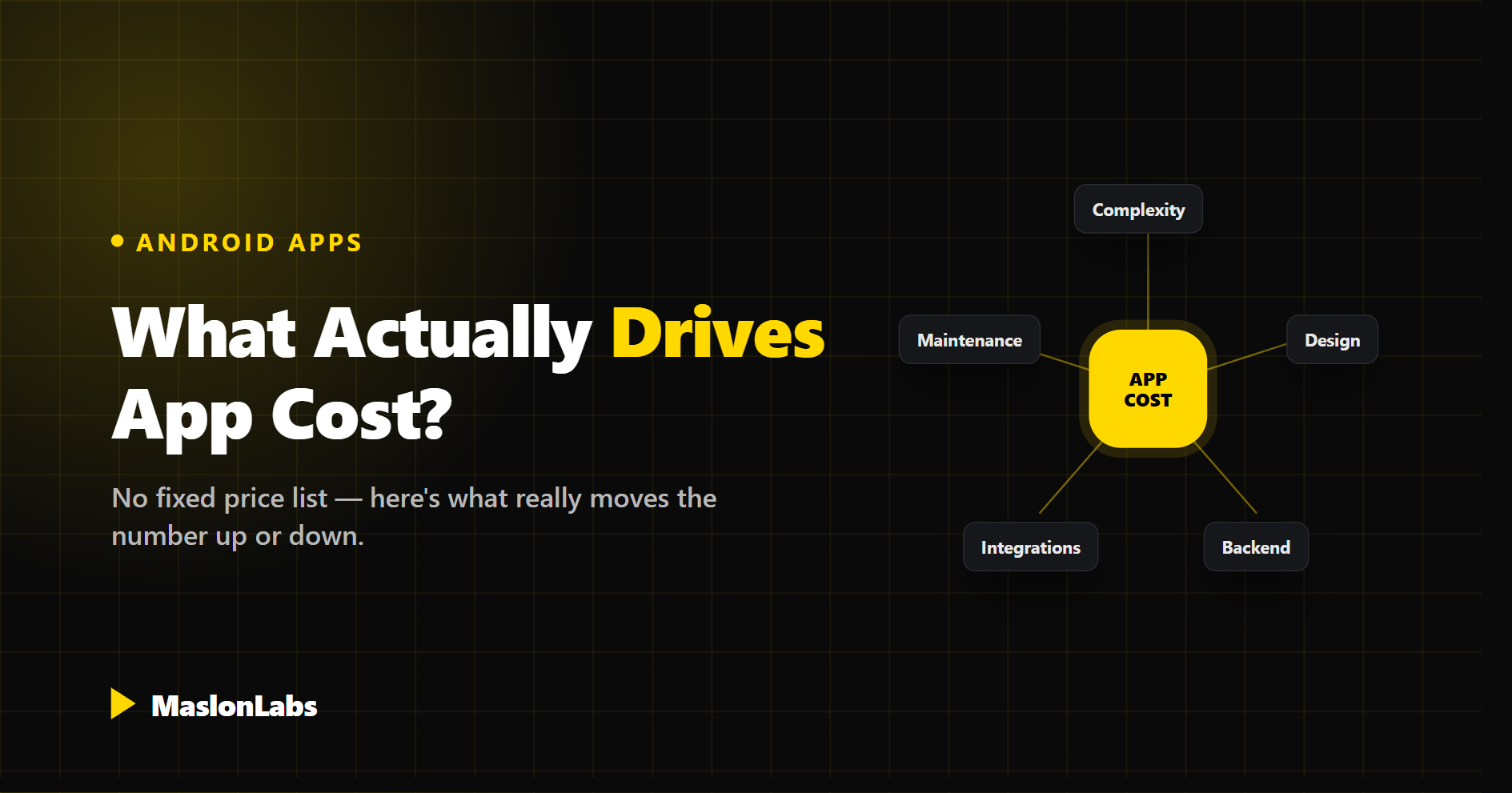
The Real Cost Drivers
- Complexity and scope. A single-purpose utility app with one screen is a fundamentally different build than an app with multiple flows, user accounts, and ongoing state to manage.
- Design and UX depth. A clean, functional interface built from an existing design system costs less than fully custom illustrations, animations, and a bespoke visual identity.
- Backend and data. An app that works entirely on-device (like a calculator or a level) is far cheaper to build and maintain than one needing a server, user accounts, or real-time sync across devices.
- Integrations. Payments, push notifications, maps, camera/AI features, or third-party APIs each add real development and testing time.
- Platform reach. Android only is cheaper than Android and iOS built in parallel, even when the two apps share a lot of design and logic.
- Post-launch maintenance. OS updates, device compatibility, and bug fixes are an ongoing cost most first-time app owners underestimate — budget for it from the start, not as an afterthought.
A Simple Way to Think About Scope
Instead of a single number, it helps to think in three rough tiers — not as our pricing, but as a way to place your own idea before you ask anyone for a quote:
| Tier | What It Typically Looks Like | What Drives It There |
|---|---|---|
| Simple | A focused, single-purpose utility app — works fully offline, no accounts. | On-device only, one clear job, minimal integrations. |
| Moderate | Custom UI, some backend (accounts, saved data, or sync), a couple of third-party integrations. | A real server component and more app states to design and test. |
| Complex | Multiple user roles, real-time features, payments, or heavy custom backend logic. | Substantial backend engineering, security, and ongoing infrastructure. |
Examples From Our Own Apps
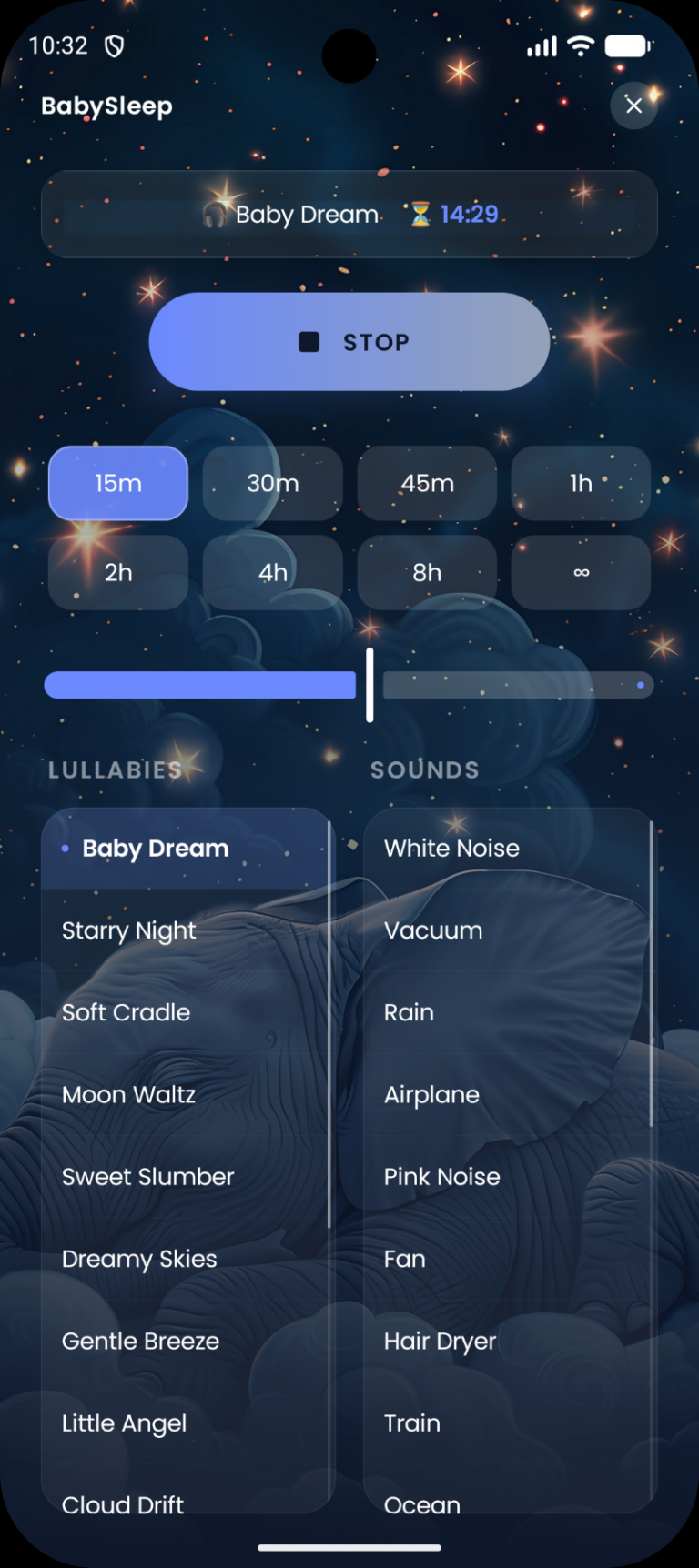
We build and maintain our own portfolio of 7 published Android apps, which makes for a useful, honest reference point — not for pricing, but for scale.
- Bubble Level sits at the simple end: one core screen, on-device sensors only, no accounts, no backend.
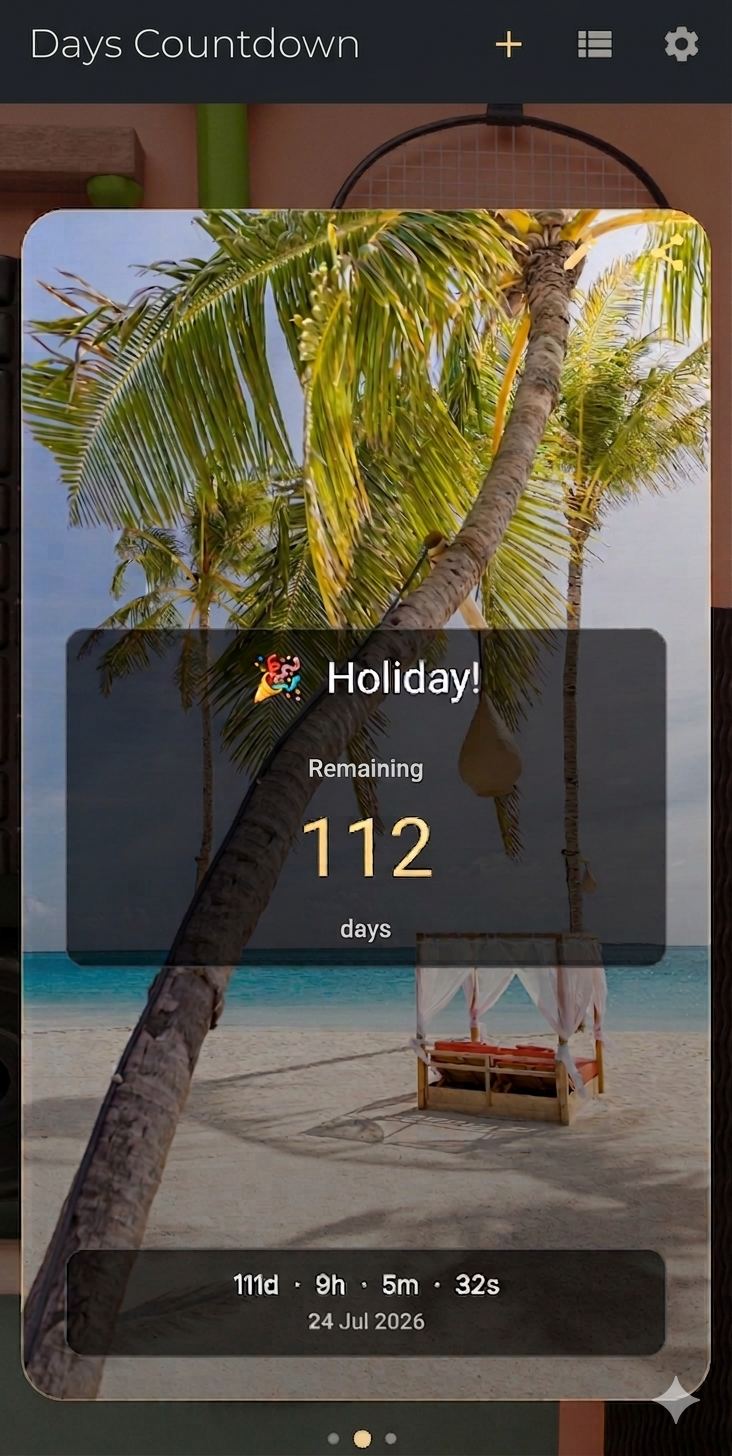
- Countdown Days is a step up — still on-device, but adds home-screen widgets, local notifications, and multiple configurable instances.
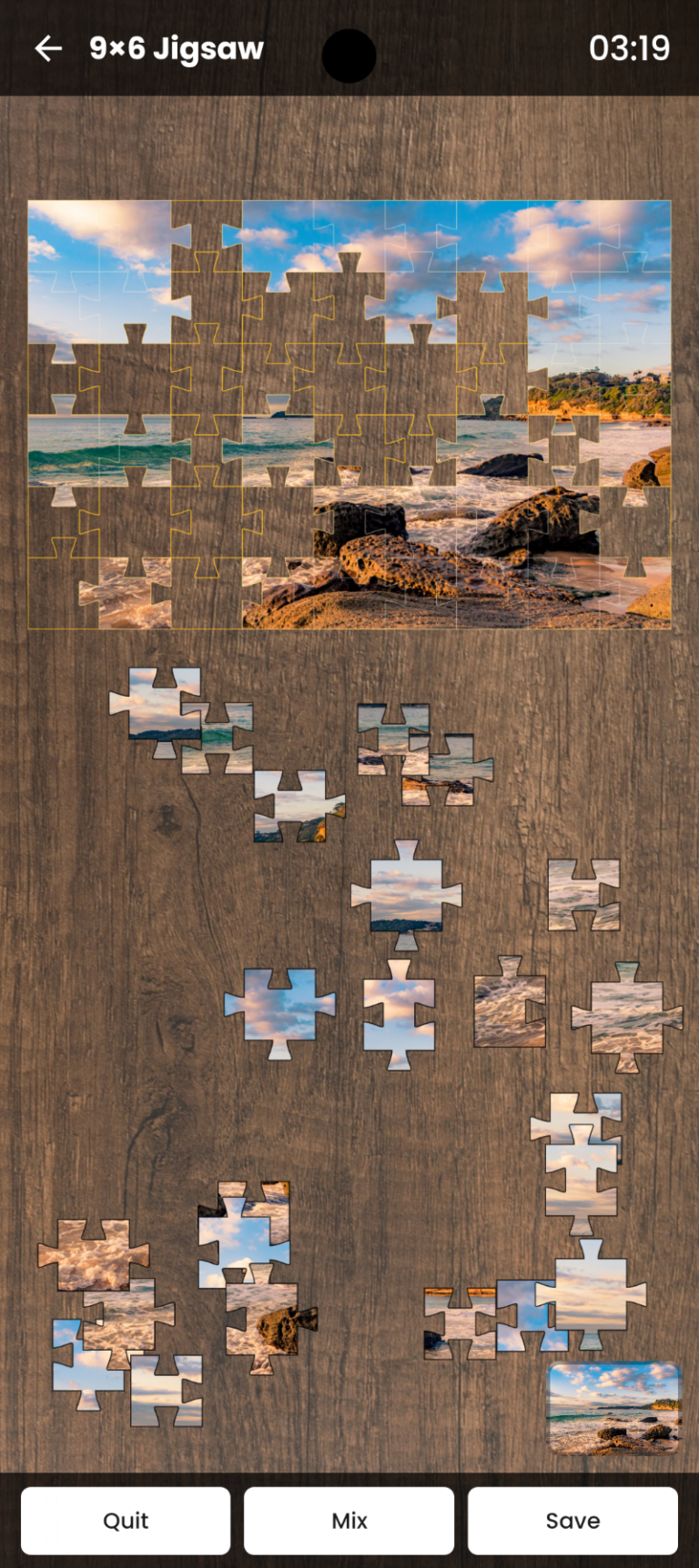
- Photo Puzzle Maker adds camera and gallery access, on-device image processing, and two distinct game modes — more moving parts than a single-screen tool, still no server required.
None of these needed a backend, and that alone keeps them well clear of the higher end of any industry range. An app that needs user accounts, a server, or real-time sync between devices is a genuinely different project — not a bigger version of the same one.
Why We Quote Every Project Individually
A fixed price list would either be so padded it insults simple projects, or so tight it loses money on complex ones. Neither helps you. What actually works is a short discovery conversation about what you’re building, followed by a real, scoped estimate for that specific app — the same way we’d want to be quoted if we were hiring someone.
Pricing
Every project is priced individually, based on complexity, scope, and reach.
Tell us what you have in mind and we’ll come back with a real, scoped estimate — not a number pulled from a generic industry chart.
Frequently Asked Questions
How much does a simple Android app cost?
A focused, single-purpose app with no backend and no accounts — similar in scope to a utility tool — sits at the lower end of most industry estimates. The only way to get a real number is to scope the specific app.
What increases Android app development cost the most?
Adding a backend (user accounts, a server, real-time sync) is usually the single biggest jump in cost and ongoing complexity, followed closely by third-party integrations like payments or maps.
Is it cheaper to build for Android only, or Android and iOS together?
Android-only is cheaper than building for both platforms, even when a lot of design and logic can be shared, since each platform still needs its own development and testing.
Do you charge hourly or a fixed project price?
We scope and quote each project individually based on what it actually involves, rather than a blanket hourly rate or a one-size-fits-all package.
Should I budget for maintenance after launch?
Yes — OS updates, new device compatibility, and bug fixes are ongoing, not one-time. It is worth budgeting for maintenance from the start rather than treating it as a surprise later.
How do I get an actual quote instead of a generic range?
Tell us about the app on our contact page and we will come back with next steps and a real, scoped estimate for your specific project.
There is no shortcut around scoping a real project honestly. But knowing what actually drives the number means you can walk into that conversation asking better questions than “how much does an app cost.”