
White noise machines and apps are everywhere in new-parent circles, often recommended as a near-guaranteed fix for a baby who won’t settle. The honest answer is a little more nuanced: white noise can genuinely help many babies sleep more soundly, but it works best when it’s used thoughtfully, at the right volume and distance. Here’s what’s actually behind the idea, and how to use it safely.
Looking for calmer, easier nights with your baby?
Try Baby Sleep by MaslonLabs →What Is White Noise, and Why Do Babies Respond to It?
White noise is a steady sound that contains a broad, even mix of frequencies — similar to the static between radio stations, or a running fan. The leading theory for why it helps babies is twofold: it masks sudden, sharp sounds (a door closing, a sibling playing, a car outside) that would otherwise startle a light sleeper awake, and its steady hum echoes the constant background noise babies heard inside the womb — blood flow, a heartbeat, muffled outside sound.
What Does the Research Say?
Studies specifically on white noise and infant sleep outcomes are limited compared to adult sleep research, and results are mixed — some small studies have found it helps babies fall asleep faster, while broader evidence on long-term sleep quality is still thin. What’s more consistently documented is the safety side: pediatric researchers have looked closely at how loud sound machines can get and how that relates to safe listening levels for infants, which is where most of the concrete guidance comes from.
How Loud Is Too Loud? Safety Guidelines
This is the part worth taking seriously. Widely cited pediatric guidance recommends:
- Keep the volume moderate — roughly as loud as a soft shower, not louder than a normal conversation.
- Place the device several feet from the crib, never inside it or directly beside your baby’s head.
- Avoid running it at maximum volume even briefly — some sound machines can output levels loud enough for concern at close range.
- When in doubt, ask your pediatrician — especially for newborns or if your baby has any hearing-related concerns.
How to Use White Noise Safely for Better Sleep
- Choose a moderate volume. Set the volume to roughly the level of a soft shower or quiet conversation — loud enough to mask sudden noises, not loud enough to be startling.
- Position the device at a safe distance. Place your phone or speaker several feet away from the crib, never directly inside it or right next to your baby’s head.
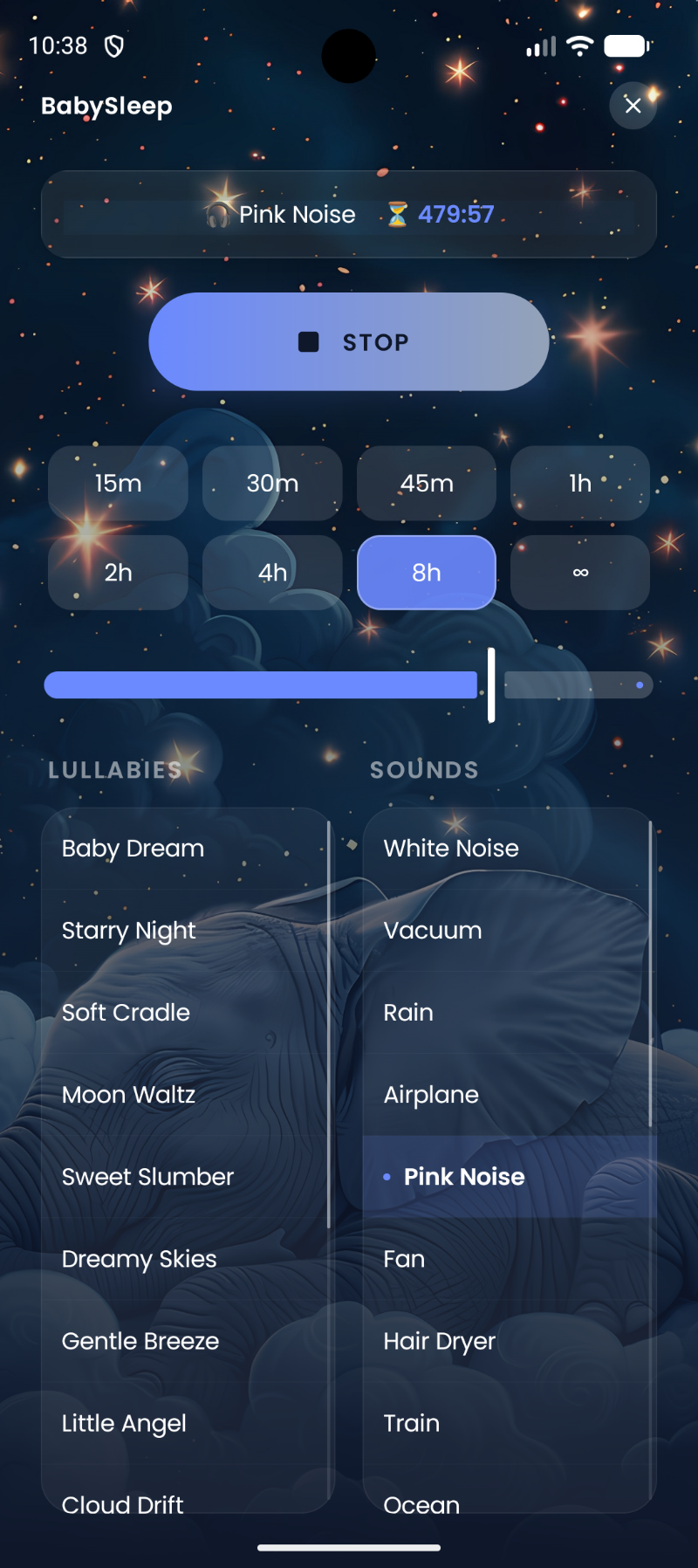
- Pick a sound that suits your baby. Try white noise, pink noise, or a nature sound, and see which one seems to settle your baby most consistently.
- Set a sleep timer. Use a timer instead of playing sound all night indefinitely, or choose continuous play if that works better for your household — either is fine as long as the volume and distance stay safe.
- Keep it consistent. Use the same sound and routine most nights so your baby starts to associate it with sleep time.
White Noise vs. Pink Noise vs. Lullabies: What’s the Difference?
- White noise — equal energy across all frequencies; can sound harsher or hissier.
- Pink noise — emphasizes lower frequencies, giving it a deeper, softer character many parents find more soothing.
- Nature sounds (rain, waves, wind) — less consistent masking than true white/pink noise, but often more pleasant to listen to.
- Lullabies — melodic rather than steady, better suited to a wind-down routine than continuous overnight masking.
Never sure which sound will actually settle your baby?
Try Baby Sleep by MaslonLabs →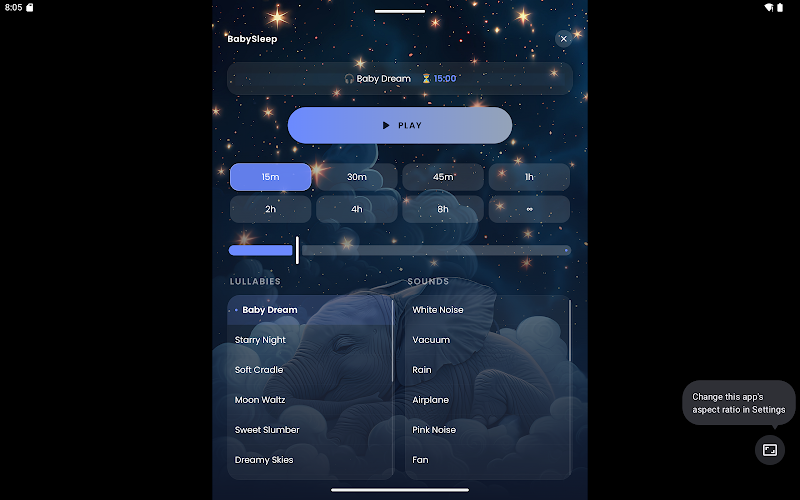
The Best White Noise App for Android
Baby Sleep by MaslonLabs was built around exactly this kind of safe, flexible use:
- White noise, pink noise, nature sounds, and lullabies in one app, so you can find what actually works for your baby.
- Built-in sleep timer, so sound doesn’t have to play all night unless you want it to.
- Simple, one-tap playback — no fumbling with settings at 2 a.m.
- Works offline, so a lost connection never interrupts a sleeping baby.
Read the full feature breakdown on our Baby Sleep app page, or get it directly from Google Play.
Frequently Asked Questions
Does white noise actually help babies fall asleep?
Many parents and some pediatric sleep specialists report that consistent white noise helps mask sudden household sounds that might otherwise wake a light-sleeping baby, and the steady sound may echo the constant ambient noise babies experienced in the womb. Formal research specifically on infant sleep outcomes is still limited, so results can vary from baby to baby.
Is white noise safe for babies to sleep with every night?
It’s generally considered safe when played at a moderate volume and placed at a safe distance from the crib rather than inside it. If you have specific concerns, especially for very young infants, it’s worth checking with your pediatrician.
How loud should white noise be for a baby’s room?
Commonly cited guidance suggests keeping the sound no louder than a soft shower — roughly the volume of a quiet conversation — and placing the device several feet away from the crib rather than directly next to your baby’s head.
What is the difference between white noise and pink noise?
White noise contains equal energy across all frequencies, which can sound harsher or hissier. Pink noise emphasizes lower frequencies, so it tends to sound deeper and softer — many parents find pink noise more soothing for sleep.
Should I run white noise all night or just while my baby falls asleep?
Both approaches are common. Playing it continuously helps mask random nighttime sounds through an entire sleep cycle, while some parents prefer using it only during the falling-asleep window. Either can work — consistency matters more than which approach you pick.
Where can I get a free white noise app for my baby’s sleep?
Baby Sleep by MaslonLabs is free on the Google Play Store, with white noise, nature sounds, lullabies, and a built-in sleep timer.
White noise isn’t a magic fix, but used at a sensible volume and distance, it’s a genuinely useful tool for calmer nights — for your baby, and for you.